
John 4.15-26
15 “Please, sir,” the woman said, “give me this water! Then I’ll never be thirsty again, and I won’t have to come here to get water.”
16 “Go and get your husband,” Jesus told her.
17 “I don’t have a husband,” the woman replied.
Jesus said, “You’re right! You don’t have a husband — 18 for you have had five husbands, and you aren’t even married to the man you’re living with now. You certainly spoke the truth!”
19 “Sir,” the woman said, “you must be a prophet. 20 So tell me, why is it that you Jews insist that Jerusalem is the only place of worship, while we Samaritans claim it is here at Mount Gerizim, where our ancestors worshiped?”
21 Jesus replied, “Trust me, dear woman, the time is coming when it will no longer matter whether you worship the Father on this mountain or in Jerusalem. 22 You Samaritans know very little about the one you worship, while we Jews know all about him, for salvation comes through the Jews. 23 But the time is coming — indeed it’s here now — when true worshipers will worship the Father in spirit and in truth. The Father is looking for those who will worship him that way. 24 For God is Spirit, so those who worship him must worship in spirit and in truth.”
25 The woman said, “I know the Messiah is coming — the one who is called Christ. When he comes, he will explain everything to us.”
26 Then Jesus told her, “I AM he, the man talking to you!”
Comments
http://www.flickr.com/photos/dreamsjung/3810919637/in/photostream/
It is interesting to track the progress of the conversation between Jesus and the woman. She expresses interest in this living water he has offered her. She seems to mistake his offer for something that will make her physical labor easier, but at least she is open to receiving what Jesus is offering. Jesus reorients her thinking toward the spiritual nature of what he is offering by getting her to recognize her own spiritual need and express it to him. This water is not about lifting buckets, it is about healing the brokenness of her life.
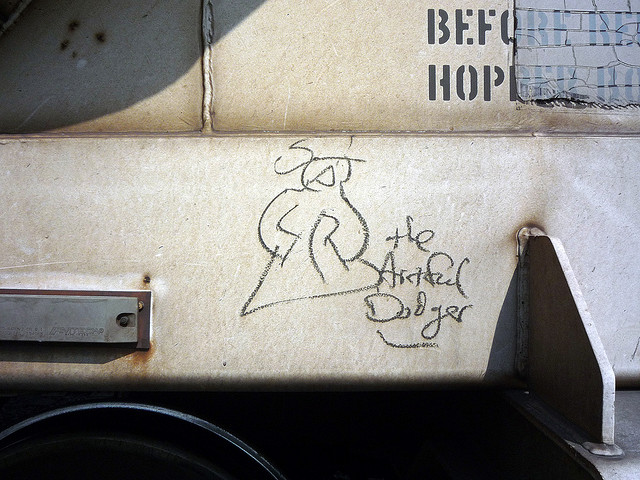
Of course, this is uncomfortable for her, so she responds with an artful dodge: I have no husband. At which point Jesus speaks directly into her pain, but notice how he affirms her in the process. Jesus tells her she spoke well and spoke truthfully – he sandwiches the hard truth in between those two encouraging statements. And about the five husband thing. The church has a tendency to read into this a lot more immoral behavior on her part than the text warrants. This betrays the church’s long standing male gender bias, our preoccupation with sexual sins, and just flat ignorance of the historical context. As a first century woman living in a patriarchal society, this woman had litte to no freedom or power over her own life. The five husbands most likely either died or abandoned her and the man she was with at the time was unwilling to commit to her, even while her very life probably depended on staying with him despite his refusal to commit. What Jesus reveals here has less to do with her sin and more to do with the sin done to her and cruel twists of fate that often attend this life. This is not to say that Jesus could not have offered such kindness and grace to a sinful woman (he will later in John), but we should always take meaning from the text, not read meaning into the text.
So Jesus brings up her pain as gently as he can, but she responds with another dodge – one I see all the time. When God things get uncomfortable, we often think that is the best time to talk about theology! Especially when it involves some sort of religious controversy, with one group denying some form of worship to some other group. Perfect distraction. She probably expected Jesus to get defensive and hoped he would get so far off topic he would forget. Jesus doesn’t do either. He acknowledges her comment while setting the whole discussion politely aside. He also acknowledges both her approach to the faith and the argument she would expect him to make – but this is just Jesus saying, ‘yes, I know how we’ve framed the issue, but’ – the but is the key there. Because what he tells her next is not in keeping with her faith or Jewish faith, except for their shared expectation that Messiah was coming.
And then Jesus does for the first time what we will see him do several times in John, he uses the old “I AM” phrase (remember Moses and the burning bush) to let her know that she was talking to the One she (and everyone else) had been waiting for. Wow. This is a Wow moment in the Gospels. I hope you can feel that as you read it. This may seem a long way from the messianic secret we saw in Mark at the beginning of the year, but it has more in common than you might think. Note that Jesus did not share this with his disciples or with Nicodemus. He shares it first with a person who is triple marginalized: a woman, a racial minority, and a person with a sketchy past. Jesus looked at her in all her weakness and pain and thought ‘Yep, I’m telling her first.’ That is the message John wants us to get here, which accentuates both Mark’s secret theme and Luke’s reversal theme. We are still talking about the Jesus who reveals himself selectively and who privileges the underprivileged.
There is a lot here for us to think about. We do this same sort of dodge-dance with Jesus all the time. Misdirect. Change the subject. We are all artful dodgers. Yet Jesus keeps coming. Gently persistent. Invasively kind. Truthfully loving and lovingly truthful. This is how he always is with us. And how he calls and teaches us to be with each other.
New Living Translation (NLT) Holy Bible. New Living Translation copyright© 1996, 2004, 2007 by Tyndale House Foundation. Used by permission of Tyndale HousePublishers Inc., Carol Stream, Illinois 60188. All rights reserved.
 6 Jacob’s well was there; and Jesus, tired from the long walk, sat wearily beside the well about noontime. 7 Soon a Samaritan woman came to draw water, and Jesus said to her,
 Mike Raburn
You must be logged in to post a comment.