
Matthew 27:1-10
1 Very early in the morning the leading priests and the elders of the people met again to lay plans for putting Jesus to death. 2 Then they bound him, led him away, and took him to Pilate, the Roman governor.
 3 When Judas, who had betrayed him, realized that Jesus had been condemned to die, he was filled with remorse. So he took the thirty pieces of silver back to the leading priests and the elders. 4 “I have sinned,” he declared, “for I have betrayed an innocent man.”
“What do we care?” they retorted. “That’s your problem.”
5 Then Judas threw the silver coins down in the Temple and went out and hanged himself.
6 The leading priests picked up the coins. “It wouldn’t be right to put this money in the Temple treasury,” they said, “since it was payment for murder.” 7 After some discussion they finally decided to buy the potter’s field, and they made it into a cemetery for foreigners. 8 That is why the field is still called the Field of Blood. 9 This fulfilled the prophecy of Jeremiah that says, “They took the thirty pieces of silver — the price at which he was valued by the people of Israel, 10 and purchased the potter’s field, as the Lord directed.”
Comments
This marks the second time in Matthew’s Gospel that money has scattered across the Temple floor. The first time Jesus disrupted business as usual and most likely made his arrest and execution inevitable. Those in power do not suffer such disruptions lightly. We see here a chilling example of why Jesus had a problem with business as usual. Distraught at the deadly turn of events and his own complicity, Judas comes to his religious leaders confessing his sin. Their response is callous and dismissive. They turn Judas away and leave him alone with his despair. The outcome is tragic but hardly surprising. The religious leaders show great care for how the “blood money” is used, but no care at all for the desperate man. As Jesus has said more than once, they focus on minutiae and ignore what really matters.
There are two critical things that I think we should take away from this sad passage. The first is that we cannot leave individuals to take care of sin on their own. “That’s your problem,” is never an appropriate response from the church. Your problem is our problem. That is not to say that your problem is someone else’s problem in a specific sense (this is one of the flaws of current modesty teaching, that one person is responsible for the sin of another), rather, sin is a communal issue and must be dealt with as such. What does this look like? It begins with pastors who care for people and accept that the sin of others is something they have to care deeply about.
The other thing I think we need to take away from this is how very human, how very ordinary Judas was. Throughout history attempts have been made to either villainize or more recently indemnify Judas. Thinking that otherizes Judas or removes his action from the realm of possibility from the rest of us must be avoided. Judas was one of the Twelve. Judas prayed for people. Judas preached the Gospel. Judas saw people healed and delivered from demons when he prayed for them. Judas was taught by Jesus directly, face to face, for three years. His betrayal is not far removed from Peter’s cowardly denial we read yesterday. His repentance here may have been genuine (there is no way we can judge this). He is a tragic figure and he, like all the other sorry figures in the Bible, is just as human as you or I. We are as prone to failure of this magnitude as he was. And blood money is as likely to scatter across the floors of our sanctuaries as it was the Temple.
One final note about the Blood Field. Matthew used the word for blood three times in this short passage (the whole story is preparing us for Jesus’ death at the end of the chapter): it is Jesus’ blood that buys this field. The value was the equivalent of what a person was to be compensated if one of their slaves was gored by another’s bull. Jesus was worth no more to them than a slave and the field was worth no more than somewhere to bury foreigners. Even here we see that the blood of Jesus welcomes in the outsiders, gives those who are rejected some place to rest. Neither the betrayal of Judas or the callousness of the religious leaders can do anything other than work toward the mission of Jesus. His kingdom advances even in defeat.
The New Living Translation (NLT)Holy Bible. New Living Translation copyright© 1996, 2004, 2007 by Tyndale House Foundation. Used by permission of Tyndale HousePublishers Inc., Carol Stream, Illinois 60188. All rights reserved.
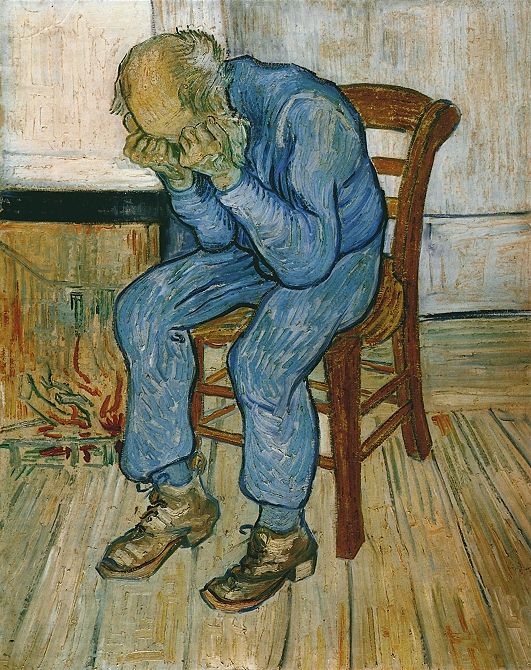 75 Suddenly, Jesus’ words flashed through Peter’s mind: “Before the rooster crows, you will deny three times that you even know me.” And he went away, weeping bitterly.
 Mike Raburn
You must be logged in to post a comment.