
Matthew 23:1-12
1 Then Jesus said to the crowds and to his disciples, 2 “The teachers of religious law and the Pharisees are the official interpreters of the law of Moses. 3 So practice and obey whatever they tell you, but don’t follow their example. For they don’t practice what they teach. 4 They crush people with unbearable religious demands and never lift a finger to ease the burden.
 5 Everything they do is for show. On their arms they wear extra wide prayer boxes with Scripture verses inside, and they wear robes with extra long tassels. 6 And they love to sit at the head table at banquets and in the seats of honor in the synagogues. 7 They love to receive respectful greetings as they walk in the marketplaces, and to be called ‘Rabbi.’
8 Don’t let anyone call you ‘Rabbi,’ for you have only one teacher, and all of you are equal as brothers and sisters. 9 And don’t address anyone here on earth as ‘Father,’ for only God in heaven is your spiritual Father. 10 And don’t let anyone call you ‘Teacher,’ for you have only one teacher, the Messiah. 11 The greatest among you must be a servant. 12 But those who exalt themselves will be humbled, and those who humble themselves will be exalted.”
Comments
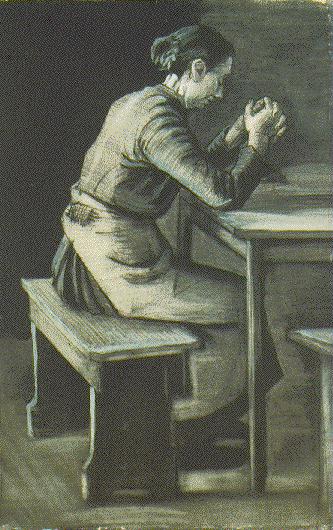
Prayer boxes worn on the arm were meant to facilitate a life of prayer, but Jesus explains that for the religious leaders the opposite had become the case. The boxes had become symbols of honor that took the place of prayer. Receiving respect and deference from others soothed the unsettled feeling in their hearts that would otherwise only be soothed in prayer. The same was true of the titles. They enjoyed being called rabbi, father (a term denoting socio-political power), and teacher, hearing those honorifics given to them satisfied them so much they no longer needed to teach, nurture, or instruct. Jesus wants none of this and forbids his followers from using any titles at all for each other. He tells us to do the work as humble servants and leave out the self-promotion. Take joy in the work itself, not the praise/respect/title you get for doing (or not doing) the work. Don’t talk about praying or make it look like you pray – just pray. Don’t let anything other than prayer deal with the unsettledness that leads to prayer. Don’t talk about serving, teaching, shepherding, instructing – just serve. Serve in whatever capacity you have been called. Calling is fundamentally an unsettling, the Spirit giving you a task to do by making you feel uncomfortable until it is done. Don’t let anything give you comfort other than doing the thing that needs doing.
The New Living Translation (NLT)Holy Bible. New Living Translation copyright© 1996, 2004, 2007 by Tyndale House Foundation. Used by permission of Tyndale House Publishers Inc., Carol Stream, Illinois 60188. All rights reserved.
 37 Jesus replied,
 Mike Raburn
You must be logged in to post a comment.