Red Letter Year: 2/28

Mark 15:1-15

15 Very early in the morning the leading priests, the elders, and the teachers of religious law—the entire high council—met to discuss their next step. They bound Jesus, led him away, and took him to Pilate, the Roman governor.
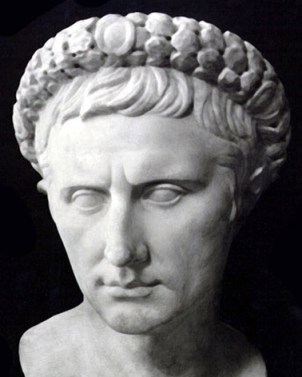
Pilate asked Jesus, “Are you the king of the Jews?”

Jesus replied, “You have said it.”

Then the leading priests kept accusing him of many crimes, and Pilate asked him, “Aren’t you going to answer them? What about all these charges they are bringing against you?” But Jesus said nothing, much to Pilate’s surprise.

Now it was the governor’s custom each year during the Passover celebration to release one prisoner—anyone the people requested. One of the prisoners at that time was Barabbas, a revolutionary who had committed murder in an uprising. The crowd went to Pilate and asked him to release a prisoner as usual.

“Would you like me to release to you this ‘King of the Jews’?” Pilate asked. 10 (For he realized by now that the leading priests had arrested Jesus out of envy.) 11 But at this point the leading priests stirred up the crowd to demand the release of Barabbas instead of Jesus. 12 Pilate asked them, “Then what should I do with this man you call the king of the Jews?”

13 They shouted back, “Crucify him!”

14 “Why?” Pilate demanded. “What crime has he committed?”

But the mob roared even louder, “Crucify him!”

15 So to pacify the crowd, Pilate released Barabbas to them. He ordered Jesus flogged with a lead-tipped whip, then turned him over to the Roman soldiers to be crucified.

Comments

You can come away from the Gospels thinking Pilate was an okay guy. That he wanted justice, wanted to set the innocent free, but was forced by the mob to hand Jesus over (when we get to Matthew, he even washes his hands). Don’t be fooled. Pilate was a piece of work. He was recalled to Rome and reprimanded by two different emperors for his violent abuse of the Jews under his governance. When your brutality shocks the likes of Tiberius, you are a thug. Pilate went out of his way to bait the Jewish people and then met resistance with lethal force. There is no reason to think Pilate was especially interested in justice on this occasion; more likely he enjoyed how agitated the religious leaders were because of Jesus and wanted to use that tension as an occasion to crack down and further subjugate the people. Jesus shows an absolute unwillingness to be used in such a way. Whatever Pilate hoped to accomplish, it is both Jesus and  the religious leaders who use him to get what they want – an immediate execution. This remains true: Jesus resists being used by those in power as a tool for the oppression and subjugation of others. This happens, but only through a grotesque distortion of the Gospel. That’s why Anglican slavers didn’t allow the Gospel shared with their cargo, because where the Gospel is truly shared the Spirit is the one really doing the sharing. And where the Spirit of the Lord is, there is freedom.

New Living Translation (NLT)

Holy Bible. New Living Translation copyright© 1996, 2004, 2007 by Tyndale House Foundation. Used by permission of Tyndale House Publishers Inc., Carol Stream, Illinois 60188. All rights reserved.

Red Letter Year: 2/27

Mark 14:53-72

53 They took Jesus to the high priest’s home where the leading priests, the elders, and the teachers of religious law had gathered. 54 Meanwhile, Peter followed him at a distance and went right into the high priest’s courtyard. There he sat with the guards, warming himself by the fire.

55 Inside, the leading priests and the entire high council were trying to find evidence against Jesus, so they could put him to death. But they couldn’t find any. 56 Many false witnesses spoke against him, but they contradicted each other. 57 Finally, some men stood up and gave this false testimony: 58 “We heard him say, ‘I will destroy this Temple made with human hands, and in three days I will build another, made without human hands.’” 59 But even then they didn’t get their stories straight!

60 Then the high priest stood up before the others and asked Jesus, “Well, aren’t you going to answer these charges? What do you have to say for yourself?” 61 But Jesus was silent and made no reply. Then the high priest asked him, “Are you the Messiah, the Son of the Blessed One?”

62 Jesus said, “I Am. And you will see the Son of Man seated in the place of power at God’s right hand and coming on the clouds of heaven.”

63 Then the high priest tore his clothing to show his horror and said, “Why do we need other witnesses? 64 You have all heard his blasphemy. What is your verdict?”

“Guilty!” they all cried. “He deserves to die!” 65 Then some of them began to spit at him, and they blindfolded him and beat him with their fists. “Prophesy to us,” they jeered. And the guards slapped him as they took him away.

66 Meanwhile, Peter was in the courtyard below. One of the servant girls who worked for the high priest came by 67 and noticed Peter warming himself at the fire. She looked at him closely and said, “You were one of those with Jesus of Nazareth.”

68 But Peter denied it. “I don’t know what you’re talking about,” he said, and he went out into the entryway. Just then, a rooster crowed.

69 When the servant girl saw him standing there, she began telling the others, “This man is definitely one of them!” 70 But Peter denied it again. A little later some of the other bystanders confronted Peter and said, “You must be one of them, because you are a Galilean.”

71 Peter swore, “A curse on me if I’m lying—I don’t know this man you’re talking about!” 72 And immediately the rooster crowed the second time. Suddenly, Jesus’ words flashed through Peter’s mind: “Before the rooster crows twice, you will deny three times that you even know me.” And he broke down and wept.

Comments

Not a lot of red letters today. Not a lot of truth telling in this passage. As is too often the case, the “trial” features leaders looking for something to give them an excuse to do what they want, something to support a decision they have already made. When you are only looking and listening for what you want to see and hear, you are blind and deaf to the truth, even when it is plainly stated to you. All of the secrecy about Jesus’ identity that Mark kept emphasizing pays off here in the most direct statement in all the Gospels. Jesus finally lays all his cards on the table and comes clean with the religious leaders. But they weren’t looking for truth and they didn’t want a Messiah. They aren’t the only ones short on truth here. Their falsehood is mirrored by Peter’s, who seems to be the only one of the twelve who didn’t completely desert Jesus, but whose courage fails under the ‘harsh interrogation’ of a servant girl. We can so easily wind up in one of these untruth traps, where our own thinking blinds us to truth or our own fear leads us to deny or disclaim what we know is true. When we are plainly told and can’t see it. When we are plainly asked and can’t say it. It takes a lot of courage to accept truth (especially uncomfortable truth, but it always takes some measure of courage) and even more to share it. I hope we are brave enough for both.

New Living Translation (NLT)

Holy Bible. New Living Translation copyright© 1996, 2004, 2007 by Tyndale House Foundation. Used by permission of Tyndale House Publishers Inc., Carol Stream, Illinois 60188. All rights reserved.